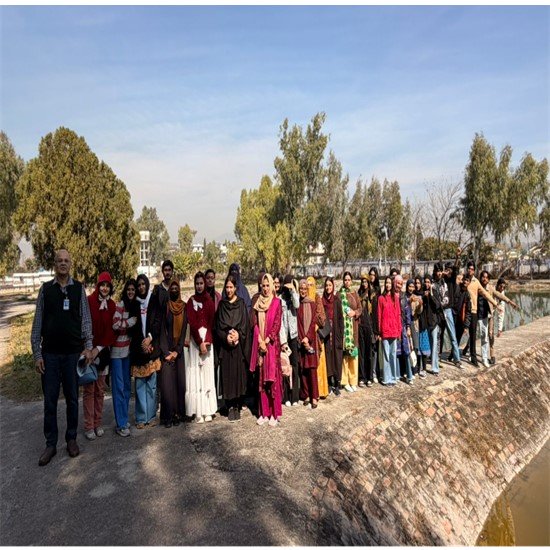
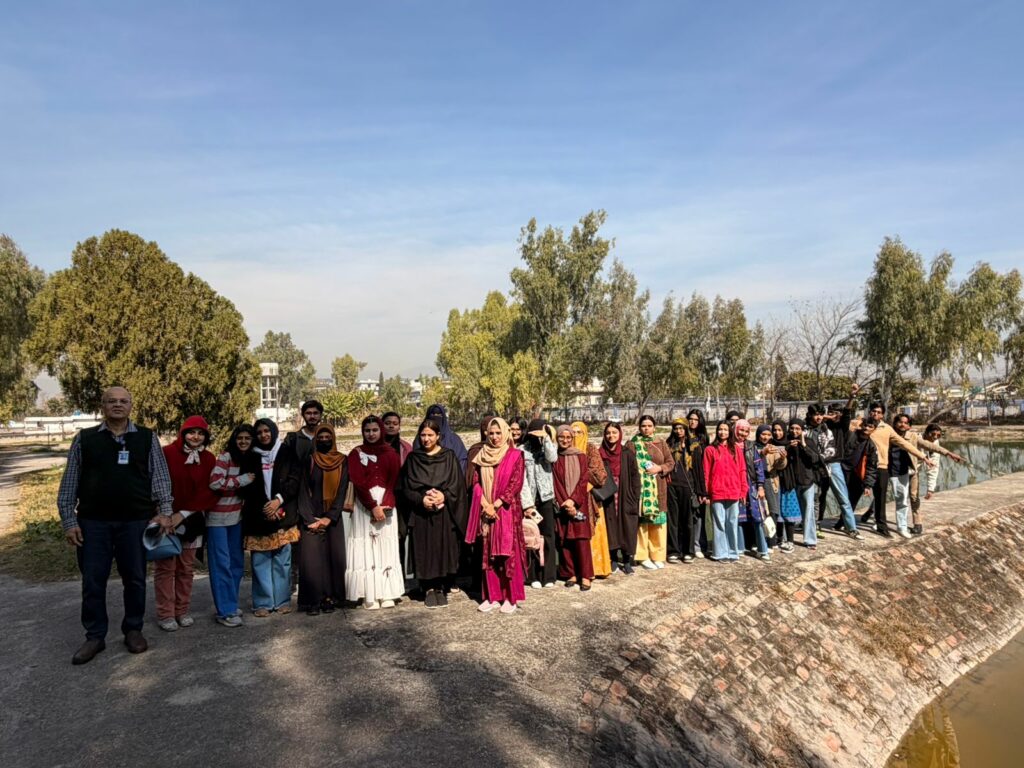
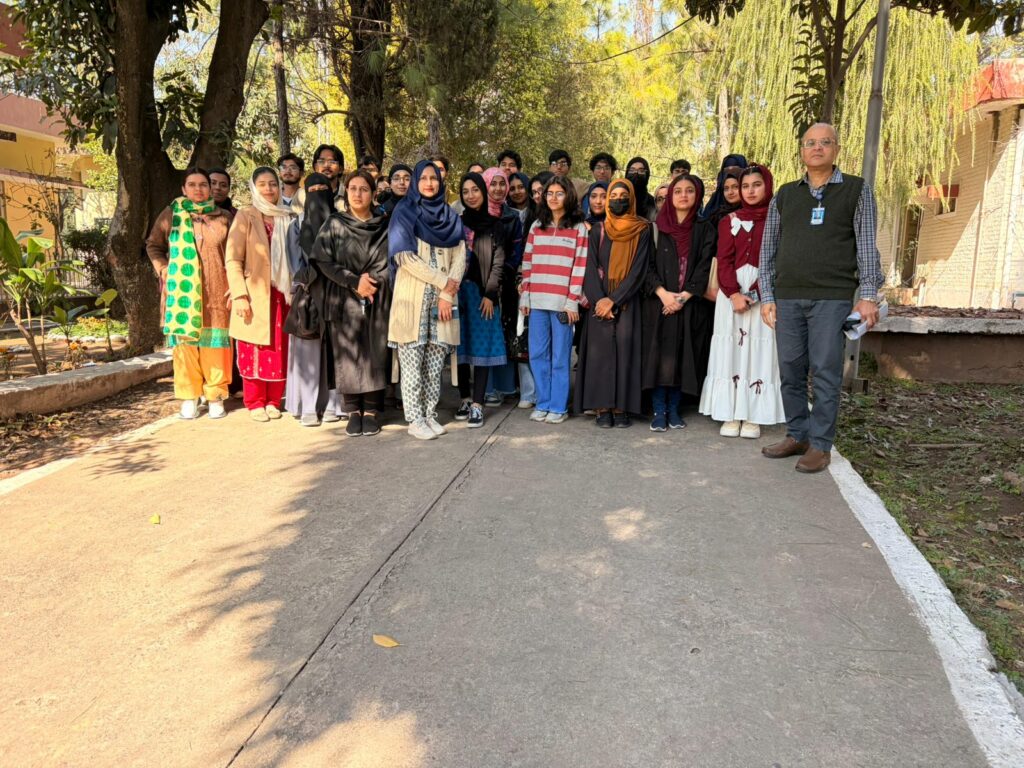
Industrial trip of BE Environmental Engineering students to Rawal Lake Fish Hatchery, Islamabad
Industrial Visits
Accompanying Faculty Members: Dr. Imran Hashmi and Ms. Mehwish Khalid
Purpose of the Trip: To strengthen microbiological competencies by studying microbial dynamics, biofloc formation, pathogen control, and beneficial microbial interactions, while developing skills to design eco-friendly aquaculture systems that support fish health, productivity, and environmental protection.
Students Learning Outcomes:
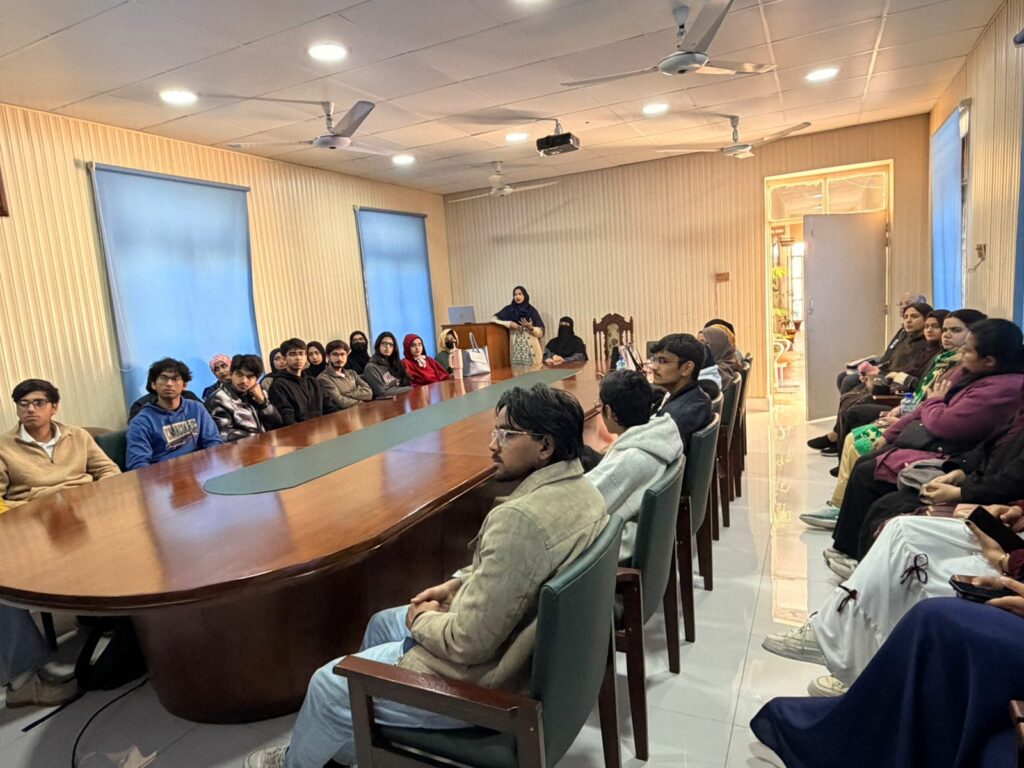
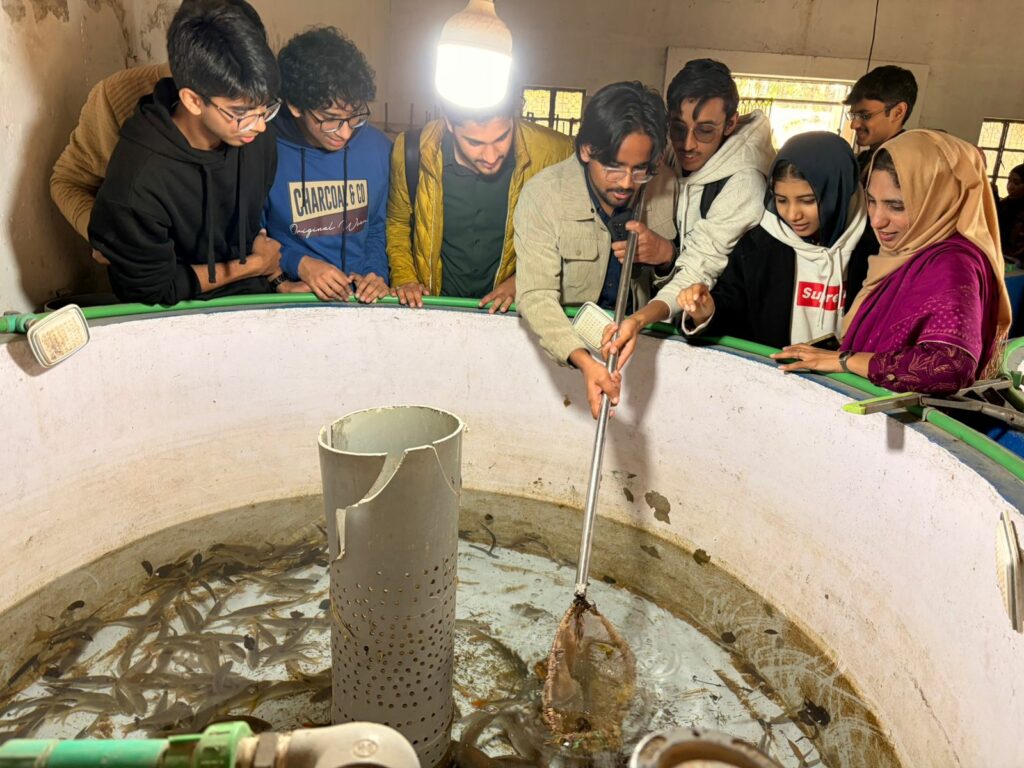
The academic visit to the Rawal Lake Fish Hatchery, Department of Fisheries, Government of the Punjab provided students with career-oriented exposure to aquaculture operations and modern hatchery management practices. Environmental Engineering Undergraduate Students observed the facility and developed practical understanding of fish seed production processes, including broodstock selection, induced breeding, feeding regimes, larval rearing, and nursery management—skills directly relevant to careers in fisheries management, aquaculture enterprises, and environmental consultancy. Fisheries officials emphasized the role of scientifically managed aquaculture in conserving aquatic biodiversity and strengthening food security, while introducing commercially important indigenous and other species in Punjab such as Tilapia, Grass Carp, and Silver Carp, highlighting employment and entrepreneurship opportunities in the fisheries sector, especially for engineers.
A major focus of the visit was biofloc technology as an emerging field with strong professional relevance. Students learned how microbial consortia—comprising bacteria, algae, protozoa, and organic matter—convert nitrogenous wastes into microbial biomass that serves as an additional feed source, demonstrating the applied link between engineering, microbiology and sustainable aquaculture production. This exposure highlighted career pathways in biofloc system design, aquaculture engineering, water quality management, and microbial biotechnology, where expertise in nutrient cycling, pathogen control, and environmental monitoring is increasingly required. The role of environmental engineers in maintaining optimal physicochemical conditions such as dissolved oxygen, pH, and nutrient balance was also emphasized as a critical component of intensive aquaculture operations.
Toxicological considerations were discussed in relation to the presence of ammonia, nitrite, antibiotics, heavy metals, pesticides, and other contaminants that may compromise fish health and food safety. Students gained insight into how biofloc systems and proper environmental management reduce toxic risks through microbial assimilation and waste control, underscoring the importance of careers in environmental toxicology, risk assessment, and regulatory monitoring within aquaculture and water resource sectors. The need for routine water quality testing and toxicological evaluation was presented as professional competency for environmental scientists and fisheries specialists.
The visit also highlighted the broader ecological and public health roles of fisheries, particularly the use of fish species for biological control of dengue vectors through the consumption of mosquito eggs and larvae—an approach relevant to careers in public health, vector management, and ecosystem restoration. Students further explored the biological filtration and respiratory functions of fish gills in maintaining aquatic system stability. Officials outlined the Punjab Fisheries Ordinance and its licensing framework, introducing students to policy, governance, and regulatory career pathways in sustainable fisheries management. Overall, the visit functioned as a career-focused experiential learning platform that linked microbiology, toxicology, aquaculture, environmental engineering, sustainability, and public health, preparing students for professional roles in sustainable aquaculture development, environmental monitoring, water quality management, and biological control initiatives.
 |
 |
 |
 |